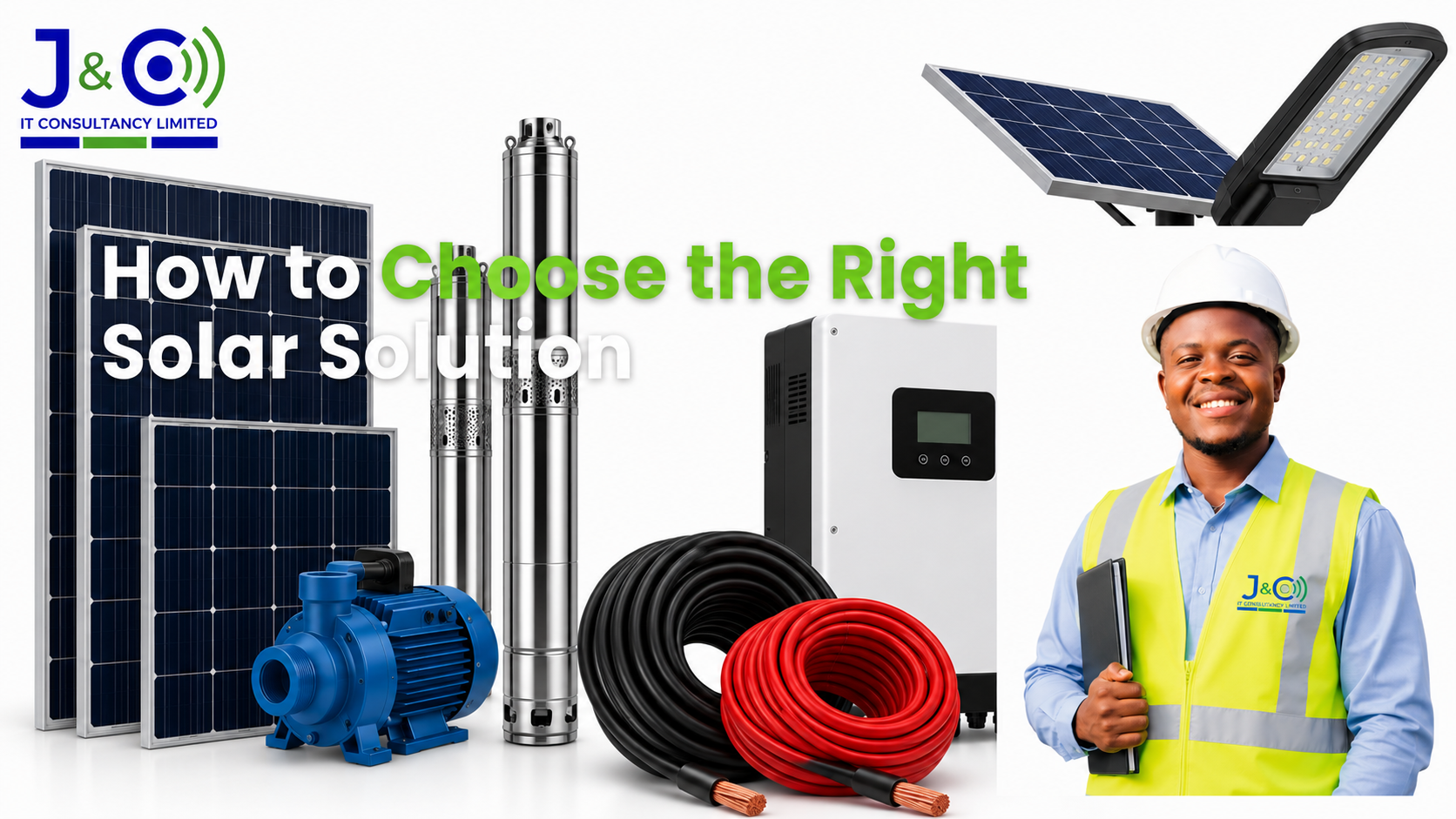

With Zambia's changing power landscape, solar energy is becoming an increasingly important option for homes, businesses, NGOs, farms, and institutions looking for more reliable electricity. However, choosing the right solar product is not simply about finding the cheapest panel, the biggest inverter or the highest-rated battery. Solar equipment needs to be selected according to your actual energy requirements, the application, your budget, and the environment in which the system will operate.
Whether you want backup power for your home, reliable electricity for your business, water pumping for your farm or lighting for your organisation, understanding what you actually need is the first step towards making the right investment.
Start With What You Need to Power
Before purchasing any solar equipment, begin by identifying what you want the system to achieve. A homeowner may simply want to keep essential appliances such as lights, a refrigerator, Wi-Fi and security systems running when power is unavailable. A business may need to keep computers, networking equipment, refrigeration, machinery or other critical equipment operating. An NGO may require electricity for offices, communication systems, field operations or community programmes.
The type and amount of equipment you want to power will determine the size and configuration of your solar system. This is why the best approach is to start with your energy needs rather than starting with a particular solar product.

Choosing the Right Solar Panels
Solar panels are the component that converts sunlight into electrical energy. When choosing panels, it is important to look beyond the advertised wattage and consider the overall performance and suitability of the panel for your system. The number and capacity of panels required will depend on your electricity consumption, available installation space, expected sunlight, and the type of system you are building.
The physical location of the panels is also important. Shading, orientation, tilt, and installation conditions can affect how much electricity the panels generate. A professionally designed system should therefore take these factors into account before determining how many panels you need.
Choosing the Right Solar Inverter
The inverter is another critical component of a solar power system because it manages and converts the electricity generated by the solar panels into usable power for electrical equipment. However, different inverter configurations are designed for different applications.
When choosing an inverter, you need to consider the amount and type of equipment you want to power, the total electrical load, whether you require battery backup, whether you intend to remain connected to ZESCO and whether you may want to expand your system in the future. Choosing an inverter simply because it has a high wattage does not necessarily mean it is the right choice. The inverter needs to be compatible with the rest of the solar system and appropriately sized for your actual requirements.
Do You Need Battery Storage?
Solar panels generate electricity when sunlight is available, but many users also need electricity after sunset or during periods when the grid is unavailable. This is where battery storage becomes important.
The appropriate battery capacity depends on how much energy you need to store and how long you want your appliances or equipment to operate when solar generation or grid electricity is unavailable. A household that only wants a few hours of backup will have different requirements from a business that needs critical equipment to remain operational for a longer period.
Battery technology, expected lifespan, operating conditions and budget should also be considered. A good solar system should balance your backup requirements with the appropriate battery capacity rather than simply choosing the largest battery available.
Choosing the Right DC Cables and Solar Wiring
Cables are sometimes overlooked when people are purchasing solar equipment, but they play an important role in the safety, reliability and performance of the system. Solar cables need to be appropriately selected according to the voltage, current, distance and environmental conditions of the installation.
Using unsuitable cables can result in energy losses, overheating and other safety concerns. This is why quality DC cables and proper installation should be considered an essential part of your solar investment rather than an area where you simply choose the cheapest available option.
Choosing the Right Solar Pump
Solar pumps are particularly useful for agriculture, irrigation, boreholes, livestock watering, gardens, schools and community water projects. However, choosing a solar pump is not simply a matter of selecting the pump with the highest power rating.
The correct pump depends on factors such as the amount of water required, the depth of the water source, the distance the water needs to travel, the required flow rate and the height to which the water must be pumped. The available solar resource and the design of the complete pumping system must also be considered.
A pump that is too small may not provide enough water for your requirements, while an unnecessarily large system could increase your costs without providing meaningful additional value. Proper assessment is therefore essential before purchasing a solar pumping solution.
Choosing the Right Solar Street Light
Solar street lights are useful for homes, businesses, schools, farms, NGO facilities, parking areas, pathways, roads and security perimeters. Because they generate and store their own energy, they can provide outdoor lighting without relying directly on conventional grid electricity.
When choosing a solar street light, consider the area that needs to be illuminated, the required brightness, how many hours the light should operate, the battery capacity and the capacity of the solar panel. The right product should provide sufficient lighting throughout the required operating period rather than simply having the highest advertised specifications.

The answer depends on your situation. If you are starting from scratch and want a complete solution, a properly designed solar system can combine panels, an inverter, batteries, cables and other necessary components into one integrated solution.
However, you may already have some equipment and only require specific components. For example, you might already have an inverter but need additional solar panels, or you may simply require DC cables, a solar pump or solar street lights for an existing project. In such cases, purchasing individual products may be more appropriate.
The important thing is to ensure that the products you purchase are compatible with the equipment you already have.
Don't Choose Solar Based on Price Alone
Price is naturally an important consideration when purchasing solar equipment, but it should not be the only consideration. Solar products are an investment, and choosing a product solely because it is the cheapest can result in higher costs over time if the equipment does not perform as expected or needs to be replaced frequently.
Consider the quality of the product, warranty, expected lifespan, performance, compatibility, availability of technical support and the reputation of the supplier. A product that costs slightly more initially may provide significantly better value if it performs reliably over a longer period.
Why Professional Advice Matters
A solar system is made up of components that need to work together. Solar panels, inverters, batteries, cables and other equipment cannot simply be selected independently without considering how they interact as a complete system.
Professional advice can help determine your energy requirements, identify the appropriate system size and recommend compatible components. It can also help you avoid the common problem of purchasing equipment that is either too small to meet your requirements or unnecessarily large for your actual needs.
This is particularly important for businesses, NGOs, farms and institutions where an unreliable or incorrectly sized system can affect important operations.
Choosing Solar for Your Home, Business or Organisation
For homes, the priority may be keeping essential appliances and services operating during power interruptions. For businesses, the focus may be maintaining productivity, internet connectivity, refrigeration, security and other critical operations. NGOs may require reliable electricity for offices, communication, healthcare, education or community programmes, while farms may be more interested in solar pumping and irrigation.
There is therefore no single solar product that is considered the best for everyone. The right product is the one that matches your application, energy requirements, budget and long-term objectives.

As more Zambians consider solar energy, making an informed purchasing decision is becoming increasingly important. Solar technology can provide an opportunity to improve energy reliability, reduce dependence on the grid and support homes and organisations during power interruptions.
However, the most expensive system is not necessarily the best system, and the cheapest product is not necessarily the best value. The goal should be to choose equipment that is properly matched to your needs and designed to work together effectively.
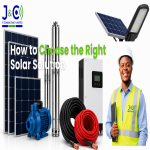
At J&C IT Consultancy Limited, we supply a range of solar products and solutions for homes, businesses, NGOs, farms and institutions. Our solar offering includes solar panels, solar inverters, solar pumps, DC cables and solar wiring, solar street lights and other solar system components.
Whether you are looking for backup power for your home, a reliable energy solution for your business, a solar pumping system for your farm or solar lighting for your organisation, the right place to start is by understanding your requirements.
Don't buy solar simply because it is solar. Buy the right solar solution for what you actually need.